
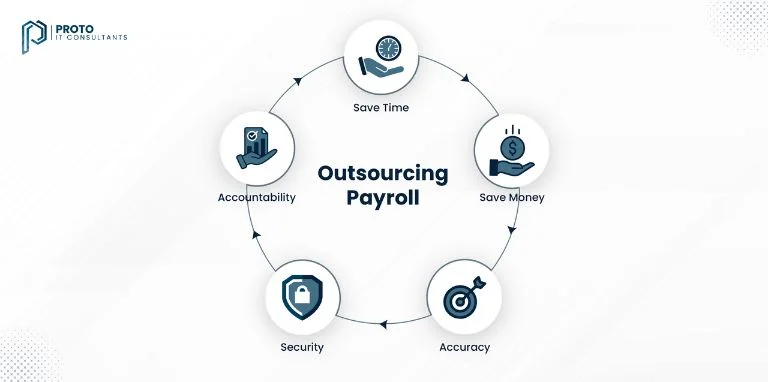
Payroll management is one of the most critical but tricky issues of any company. It entails a lot of calculations, consideration of ever-changing tax laws, and confidential financial data. In most companies, in-house payroll management is a time and resource consuming process that results in higher chances of errors.
Payroll outsourcing has become the game changer in businesses that want to automate the process and make it more efficient. Outsourcing payroll services to professionals will allow companies to concentrate on their growth and save time and money that would be spent on making costly errors.
This blog will discuss the issues of in-house payroll, the advantages of outsourcing payroll services and the steps that a business should take when deciding to outsource payroll services.
The Challenges of Managing Payroll Internally
In-house running of payroll requires a lot of effort, skill and care. These processes can prove cumbersome to the businesses of all sizes because of the following challenges:
1. Time-Consuming Administrative Work
Payroll management is a tiresome administrative procedure of calculating wages, overtime and employee records. These tasks consume valuable time that would be used in other strategic activities such as planning expansion, dealing with customers or product development.
2. Risk of Costly Errors
Payroll miscalculations can cost a company dearly even when it is a minor error. As an illustration, paying less than the employees would lead to dissatisfaction and lawsuits whereas paying more would affect the cash flow. Violation of the tax laws can lead to heavy fines or penalties.
3. Keeping Up with Changing Regulations
The payroll compliance laws and the tax codes keep on changing. Business owners need to be informed about the changes which will have to take time to research and train. The failure to do so may harm the reputation of a company and result in a legal case.
4. Rising Operational Costs
Having an in-house payroll department means expenses on special software, constant training, and acquisition of qualified employees. Such costs can be a burden to small to medium sized companies that have to operate on tight budgets.
5. Data Security Risks
It is imperative to have the right security on sensitive financial and employee information. Cybersecurity attacks and data leakage may damage the reputation of a company and result in regulatory enforcement.
How Outsourced Payroll Services Address Challenges
Outsourcing payroll helps business to offload the unnecessary responsibilities to the companies that have specialization in payroll management. Here is how outsourcing will resolve some of the payroll problems that are common to the payroll industry.
1. Significant Time Savings
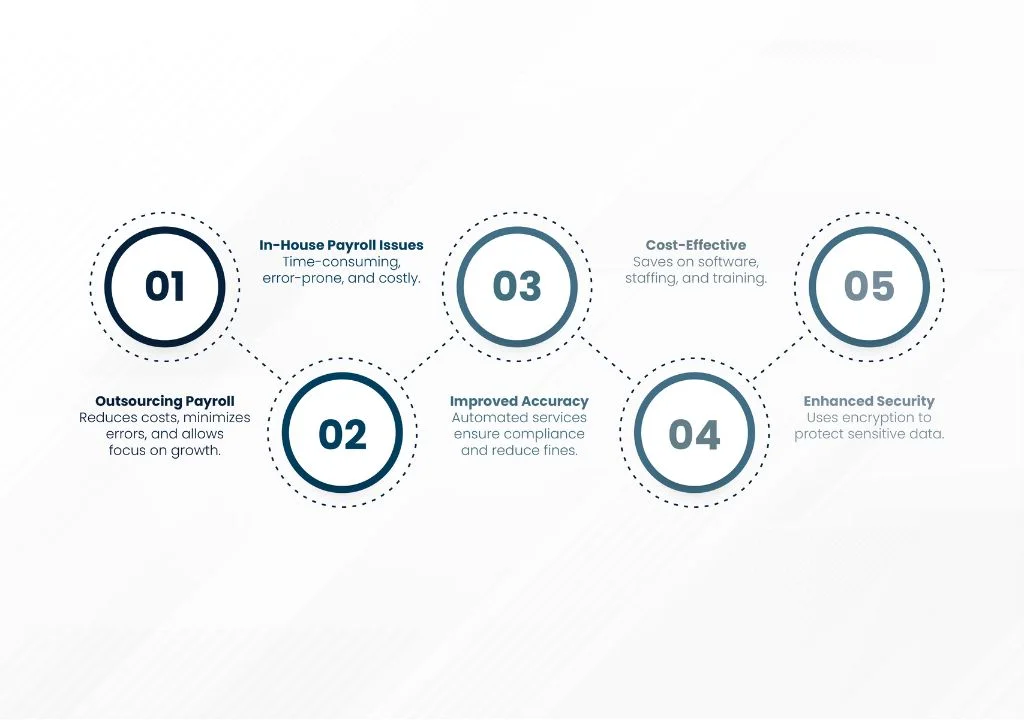
Payroll outsourcing enables the business owners to delegate the time consuming part of payroll management. Providers do all the calculations of wages and tax filings and benefits administration. This saves time on the part of the businesses so that they can concentrate on other core activities like innovation and customer service.
To illustrate, it has been found that human resources departments can save as much as 20 percent of their time by outsourcing payroll so that they can focus on more strategic initiatives.
2. Improved Accuracy and Reduced Errors
Professional payroll services operate with complex software and tools that are aimed at making the calculations accurate and the disbursements timely. Automated systems also minimize human errors, including wrong tax deductions or misclassifications of the employees. Greater accuracy leads to higher levels of trust and morale amongst the employees.
3. Ensured Compliance with Regulations
Payroll service providers are up to date with regard to local, state and national compliance requirements. They will handle everything including proper filing of taxes, adherence to labor laws among others. Access to regulatory expertise minimizes the chances of having to pay heavy fines or even audits.
4. Cost Efficiency
Even though having an in-house payroll department has a fixed cost, outsourcing is a more cost-effective solution. The companies save on the expenses related to payroll software, employee wages, training, and information technologies. Also, outsourcing is a cost-effective option as there are reduced chances of compliance fines.
5. Enhanced Data Security
Genuine payroll firms invest in the creation of the top-notch encryption and data security systems. Outsourcing will lower the chances of internal fraud and guard your sensitive data against cyber attacks. Most of the providers are also in line with international data protection requirements, which gives employers a sense of security.
6. Scalable Solutions
The management of the payroll increases with the expansion of the business. Outsourced payroll services are flexible, that is, they can adapt to various needs of your workforce as your business grows both locally and internationally.
Steps to Transition to Outsourced Payroll Services
When your company is set to outsource payroll, the transition should be smooth in order to enjoy the maximum benefits. To begin with, the following steps are to be undertaken:
1. Assess Your Current Payroll Process
The initial step is to evaluate your existing payroll system in order to identify such problems as inefficiencies, inaccuracies, or non-compliance. The awareness of these pain points will assist you in determining the services that you require an external provider to offer.
2. Research and Choose a Reliable Provider
Choose a payroll provider by doing a good research Research companies that have a good track record, experience in the industry and good reviews of their clients. Look at the providers that will offer custom solutions according to your needs in payroll.
Ensure that you consider such aspects as:
- Procedures of data protection
- The costing and the extra costs that might occur
- Accessibility of customer service
- Your HR systems and your accounting systems
If your business works with international teams or pays remote contractors across multiple countries, it’s worth looking at modern payroll platforms built specifically for global workforces. One such option is Riseworks.io, which lets businesses pay employees and contractors in both local currencies and crypto across 190+ countries, all from one compliance-ready platform. It’s particularly well-suited for SMBs that are scaling beyond domestic hiring and want to eliminate the patchwork of tools typically required to manage cross-border payroll.
3. Prepare Accurate Employee Records
Make sure that the information of the employees such as wages, benefits, and taxes is free of error before implementation. This minimizes the chances of having differences in the first processing cycle.
4. Start with a Trial Period
Once the new service has been onboarded, it is a good idea to conduct a trial period. This testing period will enable you to determine and set right any hitch prior to taking the plunge in the transition.
5. Monitor and Review Performance
Once you have put in place your outsourced payroll system you should make it a point to look at the reports and performance indicators regularly. Obtain feedbacks of the employees and streamline processes as required to enhance efficiency.
Real-Life Example of Payroll Outsourcing Success
Think of a medium sized retail firm that is not able to cope with manual calculations of payroll. The following changes were achieved in the company in six months when the company outsourced payroll to a professional service:
- 40% decrease in the hours of administrative time spent in the payroll operations
- Zero payroll compliance penalties
- Saving of 15000 dollars a year by ending the in-house software
These results show how outsourcing of payroll services is revolutionary.
Why Now is the Right Time to Outsource Payroll
The payroll outsourcing business is changing at a fast pace as market players embrace new technologies such as AI-based analytics and blockchain. Such innovations allow companies to optimize their operations, better predict payroll expenses, and increase the level of security.
Outsourcing payroll places companies in a position to respond to changes as well as remain focused on the objectives that are of high priority. Moreover, outsourced payroll services are also scalable and thus will continue to be effective as your firm continues to grow or even expand internationally.
Key Takeaways
Outsourcing payroll services provides great benefits to any company that wants to save time, minimize the number of errors, and be more efficient. The benefits include cost saving, better compliance, data security, and employee satisfaction, which are more than sufficient to handle the challenges. No matter whether you are an emerging company or a developing organization, the support of a trustworthy payroll service provider can save you some invaluable resources and redirect them to the accomplishment of your business objectives.
The most appropriate action you can take is to evaluate your payroll needs and research on the credible vendors. By doing this, your business will be in a position to concentrate on what is really important; that is, innovation, customer value, and sustainable success.
FAQs: How Outsourced Payroll Services Save Time and Reduce Errors
1. Why should my business consider outsourcing payroll services?
Outsourcing payroll saves time by delegating complex calculations, tax filings, and compliance tasks to experts. It reduces operational costs, minimizes errors, and lets your business focus on growth and core activities.
2. What problems does in-house payroll management typically face?
In-house payroll can be time-consuming, prone to costly errors, challenging due to changing regulations, expensive to maintain, and vulnerable to data security risks.
3. How do outsourced payroll services improve accuracy and compliance?
Professional providers use advanced software to automate payroll calculations and tax submissions, ensuring accuracy and up-to-date compliance with regulations, which reduces risks of fines and audits.
4. Is payroll outsourcing cost-effective for small and medium businesses?
Yes, outsourcing avoids expenses related to payroll software, staffing, and training. It also cuts costs associated with compliance penalties and operational inefficiencies, making it a budget-friendly solution.
5. How does payroll outsourcing enhance data security?
Outsourced providers invest in encryption, secure cloud platforms, and compliance with data protection standards to safeguard sensitive employee and financial data, reducing risks of internal fraud and cyberattacks.